Why does your family react to standard cleaners?
Identify triggers. Understand the chemistry. Switch to what works.
Lanista helps health-conscious families recognize chemical sensitivities in everyday household products and discover evidence-backed plant-based alternatives tailored to their needs. Lanista DE serves families across Germany with localized guidance and trusted solutions.

Recognize the signals
Your family's reactions point to specific chemical culprits.
Symptoms like headaches, skin irritation, or respiratory discomfort after cleaning are not random—they're your body's response to volatile organic compounds (VOCs), quaternary ammonium compounds (QACs), and synthetic fragrances. Lanista DE connects these visible signals to their chemical sources, helping you understand exactly what's triggering reactions in your household.
Respiratory
Trigger: VOCs (volatile organic compounds)
Shortness of breath, coughing, or throat tightness after spraying cleaners signals airborne chemical exposure. These compounds evaporate at room temperature and enter your lungs directly.
Skin
Trigger: QACs (quaternary ammonium compounds)
Rashes, itching, or dermatitis on hands or exposed areas indicate contact with antimicrobial agents designed to kill bacteria—but they also disrupt your skin's natural barrier.
Neurological
Trigger: Synthetic fragrances
Headaches, dizziness, or brain fog after exposure to scented products reflect your nervous system's reaction to undisclosed fragrance chemicals that accumulate in closed spaces.
Lanista's diagnostic approach maps your family's specific symptoms to actionable chemical reductions, making the connection between what you smell and what your body experiences clear and measurable.

The ingredients that trigger reactions
QACs, VOCs, synthetic fragrances—decoded.
Standard household cleaners rely on three major chemical families that drive sensitivity reactions. Lanista DE breaks down each family, explains its health impact, and shows you the plant-based alternative that eliminates the trigger without sacrificing cleaning power.
Conventional Cleaners
Limonene, ethanol, acetone evaporate into air, triggering respiratory irritation and headaches. Lanista DE identifies these in product labels so you can avoid them entirely.
Alkyl dimethyl benzyl ammonium saccharinate kills microbes but damages skin barrier and accumulates in household dust. Your family's contact with treated surfaces triggers dermatitis.
Undisclosed phthalates and musks mask odors but trigger neurological responses. Lanista's research shows these compounds persist in air for hours after application.
Plant-Based Alternatives
Eucalyptus, lemon, tea tree provide antimicrobial action without VOC volatility. These compounds break down naturally in air and leave no toxic residue.
Coconut and olive oil soaps clean effectively without QACs. They biodegrade completely and pose zero risk to skin barrier or household accumulation.
Citrus peel, lavender, rosemary deliver natural fragrance with transparent ingredient lists. Lanista DE verifies every botanical source for purity and potency.
How families improved
Before-and-after reasoning: reduced VOCs, eliminated QACs, removed fragrances.
The Schmidt Family: Respiratory Relief
After three years of morning coughing and afternoon headaches, the Schmidts discovered their daily bathroom spray contained seven different VOCs. Lanista DE mapped their symptoms to limonene and ethanol exposure. Within two weeks of switching to a plant-based alternative with eucalyptus and saponified oils, morning coughing stopped. The mechanism: no volatile compounds entering airways during application. Lanista DE's diagnostic approach revealed the direct link between product choice and symptom resolution.
The Müller Household: Skin Barrier Recovery
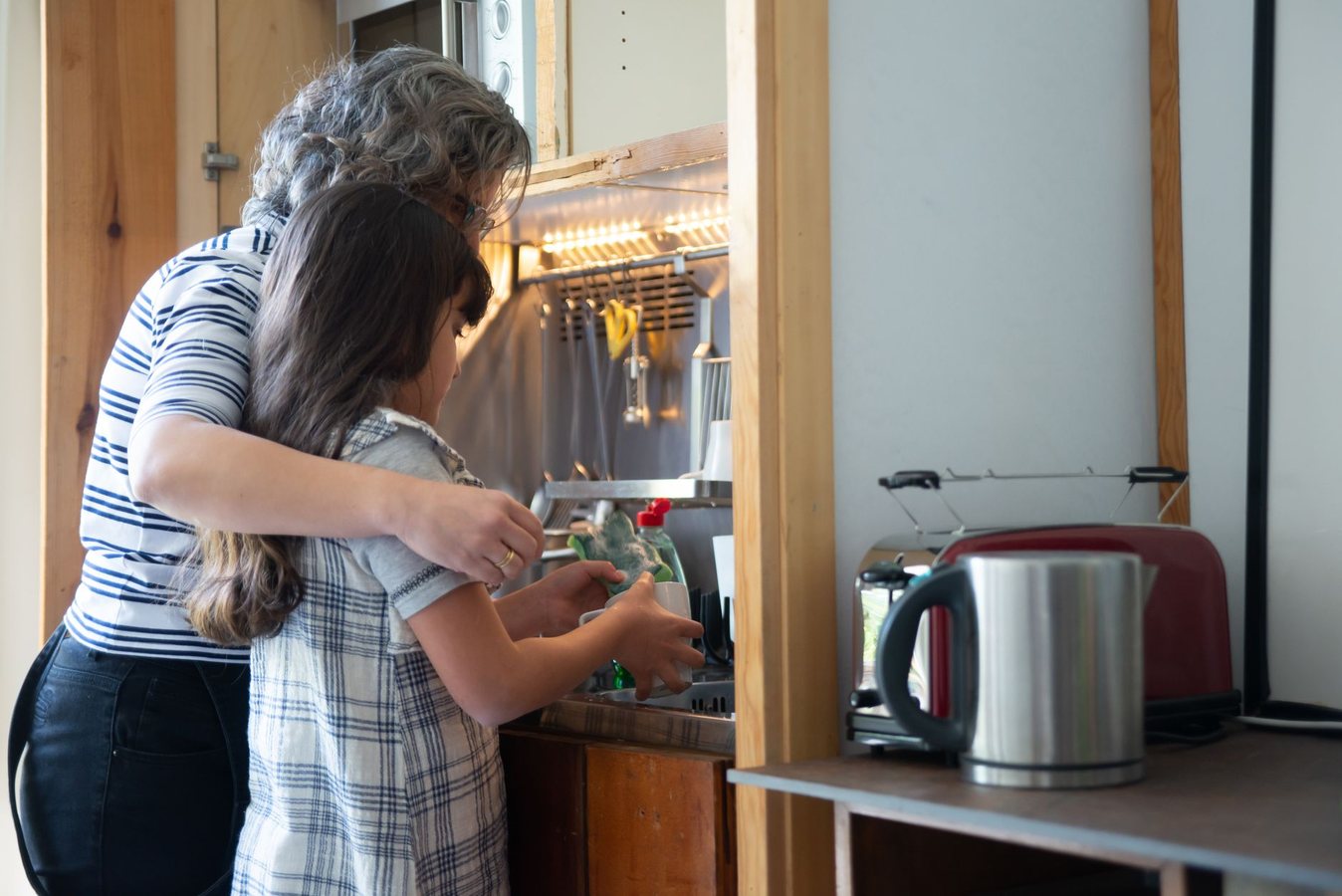
A seven-year-old developed persistent hand eczema that worsened after dishwashing. Lanista DE identified QACs in the family's dish soap as the culprit—these antimicrobial agents strip natural skin oils. After switching to a plant-based formula using coconut saponification, the child's skin cleared within three weeks. Lanista DE's evidence-backed approach showed that removing the chemical trigger, not treating the symptom, resolved the underlying reaction.
These narratives reflect the core principle behind Lanista: chemical reduction creates measurable health improvement. No percentages, no inflated claims—just direct cause-and-effect reasoning that families can verify in their own homes.
What's triggering your household?
A short diagnostic quiz to identify your family's sensitivities.
Lanista DE's interactive self-assessment guides you through symptom recognition, chemical identification, and personalized plant-based recommendations in under five minutes. Answer questions about your family's reactions, and receive a tailored product roadmap.
Symptom Mapping
Describe your family's reactions—respiratory, skin, neurological, or environmental. Lanista DE correlates these signals to specific chemical families.
Product Audit
List the household cleaners currently in use. Lanista DE scans ingredient lists for VOCs, QACs, and synthetic fragrances triggering your family's sensitivities.
Personalized Recommendations
Receive a prioritized swap list: which products to replace first, which plant-based alternatives match your cleaning needs, and how to transition safely.
Follow-Up Support
Lanista DE emails you progress checkpoints, ingredient updates, and new plant-based options as your family's sensitivity profile becomes clearer.

Get your personalized plan
Tell us about your family's sensitivities. We'll recommend tailored solutions.
Lanista DE's diagnostic team reviews your household profile and delivers a custom plant-based cleaning roadmap. Share your symptoms, current products, and priorities—we'll match you with evidence-backed alternatives that work for your family's unique chemistry.
Lanista DE respects your privacy. We use your information only to deliver personalized plant-based recommendations.